A New Era in Astronomy Begins
On June 23, 2025, the Vera C. Rubin Observatory in Chile released its first images, captured by the largest digital camera ever built. These breathtaking visuals, showcasing millions of galaxies and thousands of previously unseen asteroids, mark the dawn of a transformative era in astronomy. Named after the pioneering astronomer Vera Rubin, this observatory promises to deepen our understanding of the cosmos, from dark matter to distant supernovae.
What Makes the Vera C. Rubin Observatory Special?
The Largest Camera Ever Built
The Rubin Observatory’s 3,200-megapixel camera, roughly the size of a small car, is a marvel of engineering. It captures images covering an area of the sky equivalent to 45 full moons, offering unprecedented detail. In just over 10 hours of test observations, it revealed vibrant nebulas, star-forming regions, and millions of galaxies, setting the stage for a decade-long cosmic survey.
A Telescope Designed for Speed and Scale
The observatory’s 8.4-meter Simonyi Survey Telescope uses a unique three-mirror design, enabling rapid imaging every 39 seconds. This speed allows it to scan the entire southern sky every three to four nights, creating a dynamic, time-lapse view of the universe. Its ability to detect faint objects makes it a game-changer for spotting asteroids and distant galaxies alike.
The Legacy Survey of Space and Time (LSST)
The Rubin Observatory’s core mission is the Legacy Survey of Space and Time (LSST), a 10-year project to map the southern sky. By capturing 800 images of each sky section, it will generate a dataset larger than all previous optical telescopes combined. This ambitious survey aims to catalog 20 billion galaxies and detect millions of transient events, like supernovae.
A Glimpse of the First Images
The Trifid and Lagoon Nebulae: Star Nurseries in Focus
One of the first images, a mosaic of 678 exposures taken over seven hours, showcases the Trifid and Lagoon nebulae in the Sagittarius constellation. These star-forming regions, thousands of light-years away, reveal intricate clouds of gas and dust. Zooming into the image feels like stepping into a cosmic art gallery, with vibrant pinks and purples painting the birthplaces of stars.
The Virgo Cluster: A Sea of Galaxies
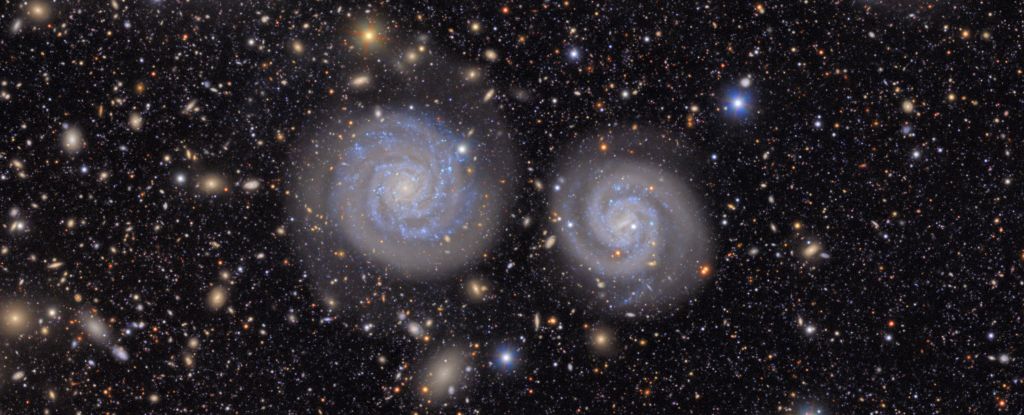
Another stunning image zooms into the Virgo Cluster, revealing about 10 million galaxies in a single frame. From spiral galaxies to merging trios, the image captures light emitted billions of years ago, before our solar system even formed. It’s a humbling reminder of how vast and ancient the universe is.
Asteroid Discoveries: A Solar System Census
In just 10 hours, the Rubin Observatory identified 2,104 previously unknown asteroids, including seven near-Earth asteroids that pose no threat. This dwarfs the annual discovery rate of 20,000 asteroids by other telescopes, hinting at the observatory’s potential to revolutionize planetary defense by tracking potential hazards.
Why These Images Matter
Unlocking Cosmic Mysteries
The Rubin Observatory is poised to tackle some of the universe’s biggest questions, like the nature of dark matter and dark energy. Named after Vera Rubin, who provided early evidence of dark matter, the observatory continues her legacy by mapping its gravitational effects across billions of galaxies. Dark energy, the force driving the universe’s accelerating expansion, will also come under scrutiny.
A Time-Lapse of the Universe
Unlike traditional telescopes that take static snapshots, Rubin’s rapid imaging creates a dynamic, movie-like view of the cosmos. It will track objects that move, flash, or pulse—think asteroids zipping by or supernovae exploding. This “time-domain astronomy” will reveal the universe’s evolution in real time, offering insights no other telescope can match.
Protecting Earth from Asteroids
The observatory’s ability to detect millions of asteroids makes it a cornerstone of planetary defense. By cataloging objects as small as 140 meters, it could identify potential threats long before they approach Earth. Its first images already demonstrate this capability, spotting thousands of space rocks in a single night.
The Engineering Marvel Behind the Images
Building the World’s Largest Camera
The LSST Camera, developed at SLAC National Accelerator Laboratory, weighs over three tons and cost $168 million to build. Its six optical filters allow it to capture light from ultraviolet to near-infrared, revealing details invisible to other telescopes. Constructing this behemoth took over a decade, with engineers overcoming challenges like maintaining precision in a camera the size of a car.
A Telescope Like No Other
The Simonyi Survey Telescope’s three-mirror design maximizes light collection, making it the most efficient telescope for wide-field imaging. Its location atop Cerro Pachón in Chile’s Andes, with clear skies and minimal light pollution, ensures optimal viewing conditions. The combination of this telescope and camera is what makes Rubin’s images so extraordinary.
Data Processing: Taming the Information Flood
Each night, Rubin generates 20 terabytes of data, equivalent to streaming 4,000 hours of HD video. Advanced AI and supercomputers in California process this flood, issuing alerts for cosmic events within minutes. This automation allows scientists worldwide to study phenomena like supernovae in near real time, a feat unimaginable 20 years ago.
The Science Behind the Spectacle
Dark Matter and Dark Energy: The Invisible Forces
Dark matter and dark energy make up 95% of the universe but remain elusive. Rubin’s images will map their effects by tracking galaxy movements and cosmic expansion. For example, its Virgo Cluster image shows how dark matter’s gravity shapes galaxy clusters, offering clues to its mysterious nature.
Supernovae: Cosmic Lighthouses
Supernovae, the explosive deaths of stars, help measure cosmic distances and the universe’s expansion. Rubin is expected to detect 10 million supernovae over its mission, compared to the handful observed historically. These “cosmic lighthouses” will refine our understanding of dark energy’s role in accelerating the universe.
Interstellar Visitors and Unknown Unknowns
The observatory could spot rare interstellar objects, like ‘Oumuamua, passing through our solar system. Dr. Federica Bianco, deputy project scientist, calls these “unknown unknowns”—discoveries we can’t predict. The analogy? It’s not just finding a needle in a haystack; it’s finding a needle when you don’t know what it looks like or if it moves.
Comparing Rubin to Other Telescopes
| Feature | Vera C. Rubin Observatory | Hubble Space Telescope | James Webb Space Telescope |
|---|---|---|---|
| Camera Resolution | 3,200 megapixels | 16 megapixels | 122 megapixels |
| Field of View | 9.6 square degrees | 0.05 square degrees | 0.21 square degrees |
| Primary Mission | 10-year sky survey (LSST) | Deep-space imaging | Infrared deep-space imaging |
| Location | Cerro Pachón, Chile | Low Earth orbit | L2 point (1.5M km from Earth) |
| Data Output | 20 TB/night | ~140 GB/week | ~570 GB/week |
Why Rubin Stands Out
While Hubble and James Webb excel at deep-space imaging, Rubin’s wide field of view and rapid imaging make it unmatched for time-domain astronomy. Its ability to catalog billions of objects and detect transient events sets it apart, making it a “discovery machine” for phenomena other telescopes might miss.
Pros and Cons of the Rubin Observatory
Pros
- Unprecedented Scale: Images 20 billion galaxies over 10 years.
- Rapid Imaging: Covers the southern sky every three to four nights.
- Planetary Defense: Detects millions of asteroids, enhancing Earth’s safety.
- Data Accessibility: Public data releases enable global scientific collaboration.
Cons
- High Costs: $800 million to build, with ongoing operational expenses.
- Data Overload: Managing 500 petabytes of data requires cutting-edge infrastructure.
- Limited Scope: Focuses on the southern sky, missing northern phenomena.
The Human Connection to the Cosmos
When I first saw the Rubin Observatory’s images, I felt like a kid staring at a starry sky for the first time. There’s something magical about knowing these galaxies existed billions of years ago, their light traveling across the cosmos to reach us. It’s humbling, like reading a letter from the universe’s past. Vera Rubin herself once said, “We have peered into a new world and have seen that it is more mysterious and more complex than we had imagined.” Her namesake observatory embodies that wonder, inviting us all to explore.
How to Engage with Rubin’s Discoveries
Where to View the Images
The Rubin Observatory’s website offers interactive tools like the Skyviewer app, where you can zoom into images of the Virgo Cluster or Trifid Nebula. These are accessible to everyone, from curious amateurs to seasoned astronomers. Check out their YouTube channel for videos showcasing the telescope’s capabilities.
Best Tools for Amateur Astronomers
- Stellarium: A free planetarium software to explore the southern sky.
- SkySafari: A mobile app for real-time sky mapping.
- Telescopes: Affordable options like the Celestron NexStar 8SE for backyard stargazing.
- Rubin Data Portal: Access public datasets (available post-2025) for analysis.
Getting Involved in Citizen Science
The observatory invites public participation through projects like classifying galaxies or spotting asteroids. Platforms like Zooniverse will host Rubin’s citizen science initiatives, letting you contribute to real discoveries. It’s a chance to be part of history, no telescope required.
People Also Ask (PAA)
What is the Vera C. Rubin Observatory?
The Vera C. Rubin Observatory is a groundbreaking facility in Chile, equipped with the world’s largest 3,200-megapixel camera. It’s designed to conduct the Legacy Survey of Space and Time, mapping 20 billion galaxies and detecting millions of cosmic events over 10 years.
How does the Rubin Observatory’s camera work?
The LSST Camera captures light across ultraviolet to near-infrared wavelengths using six optical filters. Its 3,200-megapixel resolution and wide field of view allow it to image vast sky areas rapidly, producing detailed images of faint objects like distant galaxies.
Why is the observatory named after Vera Rubin?
Vera Rubin was a pioneering astronomer who provided evidence for dark matter by studying galaxy rotation. The observatory honors her legacy by exploring dark matter and dark energy, continuing her work to unravel cosmic mysteries.
What are the goals of the Legacy Survey of Space and Time?
The LSST aims to create a 10-year time-lapse of the southern sky, cataloging 20 billion galaxies, 10 million supernovae, and millions of asteroids. It will study dark matter, dark energy, and transient cosmic events.
FAQ Section
How many galaxies did the Rubin Observatory capture in its first images?
In just 10 hours, it captured about 10 million galaxies, roughly 0.05% of the 20 billion it will image over 10 years.
Can the public access Rubin’s images?
Yes, the Rubin Observatory’s website and YouTube channel offer public access to images and videos. Interactive tools like Skyviewer let you explore the cosmos.
How does Rubin help with planetary defense?
By detecting millions of asteroids, including potentially hazardous ones, Rubin enhances our ability to monitor and predict threats to Earth. It spotted 2,104 new asteroids in its first 10 hours.
What makes Rubin’s camera different from others?
Its 3,200-megapixel resolution, wide field of view, and rapid imaging (every 39 seconds) make it unmatched for capturing dynamic sky events, unlike narrower-focused telescopes like Hubble.
When will the LSST survey begin?
The survey is expected to start four to seven months after the observatory’s “first light” on July 4, 2025, likely between November 2025 and February 2026.
The Future of Astronomy with Rubin
The Rubin Observatory’s first images are just a teaser of what’s to come. Over the next decade, it will generate 500 petabytes of data, equivalent to 100 million HD movies. This treasure trove will fuel discoveries for generations, from mapping dark matter to spotting interstellar visitors. As Dr. Yusra AlSayyad, a Rubin scientist, put it, “It’s like turning snapshots into a movie of the night sky.” Whether you’re a scientist or a stargazer, Rubin invites you to join this cosmic journey.
External Links
- Vera C. Rubin Observatory Official Website
- National Science Foundation
- Zooniverse Citizen Science Platform