Introduction: A Hidden Treasure on a Piano
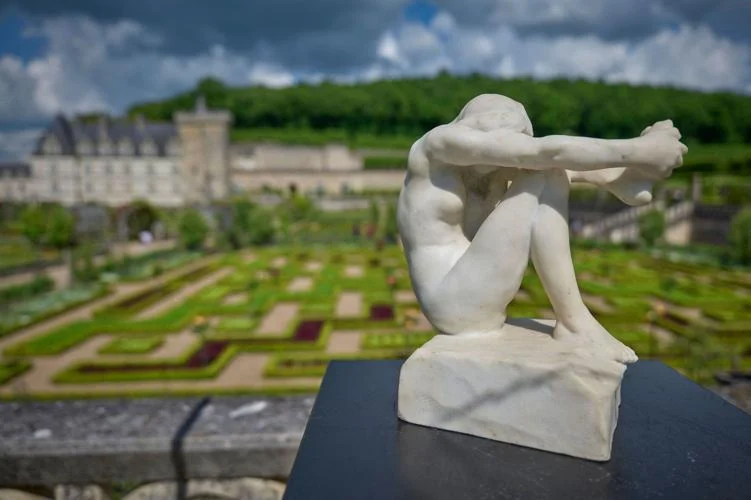
In a quiet home in central France, a small marble sculpture sat atop a family’s piano, surrounded by framed photos and everyday trinkets. For decades, the family believed it was a mere imitation of a work by Auguste Rodin, the legendary French sculptor behind The Thinker and The Kiss. Little did they know, this unassuming piece was an original Rodin, lost to the art world for nearly 120 years. In June 2025, it sold at auction for €860,000 (approximately $984,000), rewriting a small chapter in art history. This is the story of Le Désespoir (Despair), a masterpiece hiding in plain sight, and the journey from obscurity to global recognition.
The Discovery: A Serendipitous Find
How It All Began
Late in 2024, a family from central France contacted auctioneer Aymeric Rouillac about an unrelated matter. During his visit, Rouillac’s eye caught a small, 11-inch marble sculpture on their piano. The family dismissed it as a “fake” Rodin, a decorative copy of little value. But something about its craftsmanship—the delicate curve of the figure’s spine, the intricate details of the muscles—piqued Rouillac’s curiosity.
The Initial Skepticism
The family’s skepticism wasn’t unfounded. Rodin’s works, especially his marble sculptures, are rare in private hands, with most housed in prestigious institutions like the Musée Rodin in Paris. The idea that an original Rodin had been sitting in their living room seemed far-fetched. “They said, ‘It’s a fake, it’s a copy,’” Rouillac recalled in an interview with CNN. Yet, his instincts told him to dig deeper.
The Authentication Process
Rouillac took the sculpture to the Comité Rodin, the leading authority on the artist’s work. After a meticulous six-week investigation, experts confirmed its authenticity. Jérôme Le Blay, co-founder of the Comité, was unequivocal: “I realized in a second that it was real. I had absolutely no doubt.” The sculpture, titled Le Désespoir (Despair), was an original marble piece crafted by Rodin between 1892 and 1893, bearing his signature, “A. Rodin,” at its base.
Who Was Auguste Rodin?
The Master Sculptor
Auguste Rodin (1840–1917) is one of history’s most celebrated sculptors, known for his ability to capture raw human emotion in bronze and marble. His works, like The Thinker and The Kiss, are iconic for their expressive forms and innovative approach to sculpture. Rodin’s art often explored themes of passion, tragedy, and the human condition, making him a pivotal figure in the transition from classical to modern art.
Why Rodin’s Marbles Are Rare
Unlike his bronze casts, which the Musée Rodin still produces posthumously, Rodin’s marble sculptures are exceedingly rare. “Marbles in private collections are rare,” Le Blay told CNN, noting that most are held by major museums. The rediscovery of Le Désespoir was a significant event, as it had been missing from public records since its last sale in 1906.
The Sculpture: Le Désespoir Unveiled
A Study in Sorrow
Le Désespoir depicts a seated woman, her right leg drawn up and her left leg extended, holding her foot in a pose that conveys vulnerability and introspection. Crafted as part of Rodin’s monumental The Gates of Hell—a sculptural portal inspired by Dante’s Inferno—the figure is one of several versions Rodin created. Its “acrobatic pose” reflects his fascination with dance and expressive postures uncommon in academic sculpture.
The Craftsmanship
The sculpture’s details are breathtaking. “The back, the muscles, they are perfect,” Rouillac told CNN. “You can feel every vertebra in the spinal column.” This precision, combined with the emotional depth of the figure, underscores why Rodin’s marbles are so coveted. The piece, measuring just 28.5 cm by 15 cm by 25 cm, is a testament to Rodin’s ability to imbue small forms with profound meaning.
Historical Context
Le Désespoir was modeled in 1890 and sculpted in marble between 1892 and 1893. It was originally part of The Gates of Hell, a project Rodin worked on intermittently for decades, featuring over 200 figures. The sculpture’s last known sale was in 1906, after which it vanished from public view, only to resurface in 2024 on a family’s piano.
The Auction: A Dramatic Sale
The Bidding War
On June 9, 2025, Rouillac’s auction house hosted the sale at the Château de Villandry in France. The auction was a global event, with bidders from China, Switzerland, and the United States competing fiercely. After a 20-minute bidding war, a young banker from the U.S. West Coast secured Le Désespoir for €860,000, surpassing the estimated range of €500,000 to €700,000.
Why It Sold So High
Several factors drove the high sale price:
- Rarity: Original Rodin marbles are scarce, with most owned by museums.
- Provenance: The sculpture’s documented history, including its 1906 sale, added credibility.
- Condition: The piece was in pristine condition, untouched for over a century.
- Story: The narrative of a “lost” masterpiece found on a family piano captivated collectors.
Comparison to Other Rodin Sales
| Sculpture | Year Sold | Sale Price | Auction House |
|---|---|---|---|
| Le Désespoir | 2025 | $984,000 | Rouillac |
| L’Éternel Printemps | 2016 | $20.4M | Sotheby’s New York |
| The Thinker (Bronze) | Various | Up to $15M | Multiple |
| Le Désespoir (Marble, another version) | 1990 | $797,500 | Sotheby’s New York |
Le Désespoir’s 2025 sale, while not reaching the heights of L’Éternel Printemps, set a record for this particular subject by Rodin, highlighting its unique appeal.
The Emotional Impact: A Family’s Revelation
A Personal Connection
Imagine the family’s shock when they learned their “fake” sculpture was worth nearly a million dollars. For years, it had been a quiet companion to family gatherings, piano recitals, and everyday life. The discovery wasn’t just financial—it was a moment of connection to history. As Rouillac put it, “It’s a reminder that art still has secrets.”
A Universal Story
This story resonates because it’s relatable. Who hasn’t dreamed of finding a hidden treasure in their home? Whether it’s an old painting in the attic or a dusty book with a rare signature, the idea of uncovering something extraordinary is universal. For this family, the piano sculpture was a bridge to Rodin’s world, a piece of art history they’d unknowingly preserved.
Why Art Discoveries Matter
Preserving Cultural Heritage
Rediscoveries like Le Désespoir remind us of the importance of preserving art. Each piece is a snapshot of human creativity, emotion, and history. When a lost work resurfaces, it’s a chance to reconnect with the past and ensure it’s not forgotten. The Comité Rodin’s role in authenticating the sculpture underscores the value of expertise in safeguarding cultural treasures.
The Thrill of the Unknown
Art discoveries spark curiosity and wonder. “There are still treasures out there,” Le Blay told ge-magazine. “Sometimes they’re right in front of us—we just don’t recognize them yet.” This sentiment fuels the passion of collectors, historians, and everyday people who stumble upon unexpected finds.
Pros and Cons of Owning Rare Art
Pros
- Investment Potential: Art can appreciate significantly, as seen with Le Désespoir’s $984,000 sale.
- Cultural Significance: Owning a piece like a Rodin connects you to art history.
- Emotional Value: Artworks can become family heirlooms, carrying personal stories.
Cons
- Authentication Costs: Verifying authenticity, as with the Comité Rodin, can be expensive and time-consuming.
- Maintenance: Marble sculptures require careful handling to avoid damage.
- Market Risks: Art prices can fluctuate, and not all pieces appreciate.
People Also Ask (PAA)
What is Le Désespoir by Auguste Rodin?
Le Désespoir (Despair) is an 11-inch marble sculpture by Auguste Rodin, created between 1892 and 1893. It depicts a seated woman in a pose of sorrow, originally part of Rodin’s The Gates of Hell. The sculpture is notable for its emotional depth and rare marble medium.
How was the Rodin sculpture rediscovered?
The sculpture was found on a family’s piano in central France in late 2024. Initially thought to be a fake, it was authenticated by the Comité Rodin after auctioneer Aymeric Rouillac investigated its origins, revealing it as a lost original last sold in 1906.
Where can I find authentic Rodin sculptures?
Authentic Rodin works are primarily held by institutions like the Musée Rodin in Paris, the Philadelphia Museum of Art, and the Kunsthaus Zurich. Private sales are rare, but auctions through reputable houses like Rouillac or Sotheby’s are a starting point. Always verify authenticity with experts.
What are the best tools for art authentication?
- Provenance Research: Trace the artwork’s ownership history through auction records or archives.
- Expert Consultation: Organizations like the Comité Rodin provide authoritative authentication.
- Scientific Analysis: Techniques like X-ray or infrared imaging can reveal an artwork’s age and materials.
- Catalogues Raisonnés: Comprehensive records of an artist’s work, like those maintained by the Musée Rodin, are invaluable.
FAQ Section
How do you know if a sculpture is an original Rodin?
Authenticating a Rodin requires expert analysis, often by bodies like the Comité Rodin. Look for the artist’s signature (e.g., “A. Rodin”), detailed craftsmanship, and documented provenance. Scientific tests, like material analysis, can also confirm authenticity.
Why are Rodin’s marble sculptures so valuable?
Rodin’s marbles are rare because he produced fewer than his bronzes, and most are in museums. Their value comes from his reputation, the sculptures’ emotional and technical mastery, and their scarcity in private collections.
Can I sell a potential Rodin sculpture?
Yes, but start with professional authentication. Contact a reputable auction house like Rouillac or Sotheby’s, and have the piece evaluated by experts. Provenance and condition will significantly impact its value.
What should I do if I think I have a valuable artwork?
Consult an auction house or art appraiser, provide any known history, and avoid handling the piece excessively. Experts can guide you through authentication and potential sale processes.
The Broader Art Market: Trends and Insights
The Appeal of Rediscoveries
The art market thrives on stories like Le Désespoir. Rediscovered works generate buzz, drawing collectors who value rarity and narrative. In 2025, the global art market continues to see high demand for unique pieces, with auctions often exceeding estimates for historically significant works.
Risks in the Art Market
While stories like this are inspiring, the art market isn’t without pitfalls. Some X posts suggest that high-end art can be a vehicle for money laundering, though this is speculative and not specific to the Rodin sale. Always research thoroughly and work with trusted professionals to avoid scams.
Where to Learn More
- Musée Rodin: Offers resources on Rodin’s life and work (www.musee-rodin.fr).
- Artnet Price Database: Tracks auction results for market insights (www.artnet.com).
- Comité Rodin: The go-to for Rodin authentication (www.comiterodin.fr).[](https://news.artnet.com/market/rare-rodin-sculpture-fetches-1-million-2654927)
Conclusion: A Legacy Rediscovered
The journey of Le Désespoir from a family’s piano to a million-dollar auction is a testament to the enduring allure of art. It’s a story of serendipity, expertise, and the timeless value of creativity. For the family, it was a life-changing revelation; for the art world, it was a reminder that treasures can still be found in the most unexpected places. Whether you’re an art enthusiast or simply love a good story, Le Désespoir invites us all to look a little closer at the objects around us—who knows what secrets they might hold?