The Intersection of Code and Couture
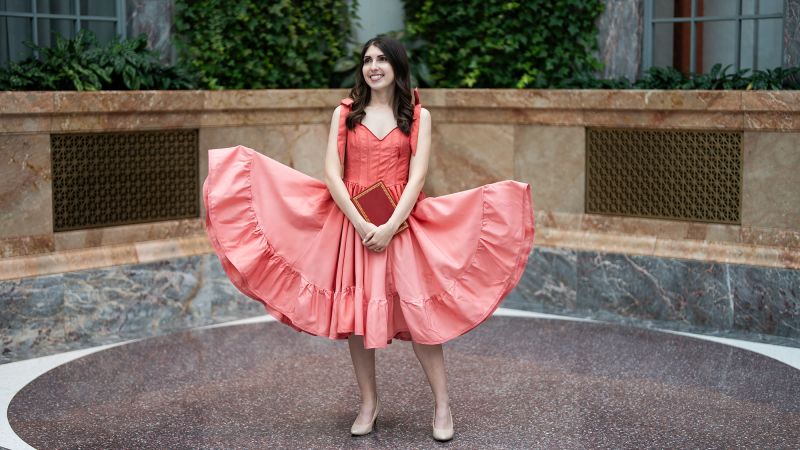
Imagine a dress that twirls on its own, its hem swaying gently as if caught in an invisible breeze, or a gown that glows with the soft flicker of candlelight, all powered by lines of code. This is the world of Christina Ernst, a 28-year-old software engineer from Chicago who has taken the fashion industry by storm with her “fashioneering” projects. Through her platform, She Builds Robots, Ernst blends technology and artistry to create garments that seem to leap straight out of a fairy tale, inspiring a new generation to explore STEM through the lens of creativity.
Who Is Christina Ernst?
A Software Engineer with a Creative Spark
Christina Ernst, a computer engineering graduate, works by day at Google’s West Loop office in Chicago, tackling complex software challenges. But outside the cubicle, she transforms into a visionary creator, merging her technical expertise with a passion for fashion. Her journey began in college at the University of Illinois Urbana-Champaign, where she crafted a Bluetooth-controlled, color-changing LED dress during a hackathon—a project that ignited her love for combining code with couture.
From Hackathons to Viral Fame
Ernst’s creations have garnered millions of views on TikTok and Instagram, with her whimsical designs capturing the imagination of a global audience. Her viral Medusa dress, complete with robotic serpents that use AI facial recognition to make eye contact, showcases her ability to turn fantastical ideas into reality. Her playful Halloween costume—a motorized, 3D-printed rat inspired by Ratatouille that tugs at her hair—has racked up nearly 45 million views, proving that her blend of humor and innovation resonates widely.
The Magic Behind Self-Twirling Gowns
How Does a Dress Twirl on Its Own?
At the heart of Ernst’s self-twirling dress is a system of robotic arms programmed to lift and spin the hem of a romantic pink smock gown. These arms, controlled by precise code, create a mesmerizing dance-like motion. Ernst’s engineering background allows her to design mechanisms that are both functional and elegant, ensuring the technology enhances rather than overshadows the garment’s aesthetic.
The Role of Coding in Fashion
Coding is the invisible thread that brings Ernst’s gowns to life. Using platforms like Arduino, she programs microcontrollers to dictate movements and lighting effects. For her self-twirling dress, she likely used servo motors, coded to rotate at specific intervals, creating fluid motion. This fusion of software and hardware transforms static fabric into dynamic art, pushing the boundaries of what fashion can be.
Prototyping: A Process of Persistence
Ernst’s creations don’t come to life overnight. She often goes through six to eight prototypes, tweaking code and hardware to perfect her designs. Her Phoenix gown, displayed at the Chicago Public Library, initially aimed to use motion sensors but was simplified to light-sensitive photoresistors for reliability. This trial-and-error approach mirrors software debugging, showcasing her resilience and problem-solving skills.
Illuminating Gowns: A Symphony of Light and Fabric
Crafting the Illusion of Candlelight
One of Ernst’s standout creations is a corset top lined with faux candles that flicker like the real thing, powered by programmable LEDs. This design evokes a romantic, almost magical ambiance, blending technology with the warmth of traditional candlelight. The LEDs are coded to mimic the natural ebb and flow of a flame, creating a captivating visual effect.
The Cathedral Gown: Stained Glass in Motion
Ernst’s cathedral gown, with its stained-glass-like panels, is another testament to her ingenuity. These panels, embedded with LEDs, illuminate to resemble glowing windows at night. The interplay of light and fabric creates a sense of wonder, turning the wearer into a walking work of art. This gown, like her others, is designed to spark curiosity about technology among those who might not typically engage with it.
The Technology Powering Ernst’s Creations
Key Components of Robotic Fashion
Ernst’s projects rely on a combination of hardware and software to achieve their magical effects. Here’s a breakdown of the essential tools she uses:
- Microcontrollers: Devices like Arduino or Raspberry Pi control motors and lights.
- Servo Motors: These enable precise movements, such as the twirling of a dress hem.
- LEDs: Programmable lights create dynamic illumination effects.
- Sensors: Photoresistors or motion sensors trigger actions based on environmental inputs.
- 3D Printing: Used to craft custom components, like the robotic rat for her Ratatouille costume.
Software Tools for Fashioneering
Ernst likely uses programming languages like C++ (for Arduino) or Python to write the code that animates her garments. These languages allow her to control hardware with precision, from timing motor movements to adjusting LED brightness. Her ability to translate software logic into physical motion is what sets her work apart.
| Component | Function | Example Use in Ernst’s Work |
|---|---|---|
| Arduino | Microcontroller | Controls robotic arms in self-twirling dress |
| Servo Motor | Precise motion | Lifts and spins dress hem |
| LEDs | Lighting effects | Creates candlelit or stained-glass effects |
| Photoresistor | Light-based trigger | Activates Phoenix gown’s feathers |
| 3D Printer | Custom parts | Crafts robotic rat for Ratatouille costume |
Why Ernst’s Work Matters
Inspiring Women in STEM
Through She Builds Robots, Ernst aims to encourage young women to explore STEM fields. Her tutorials, like one teaching how to code an embroidered Big Dipper constellation to flicker like stars, make technology accessible and fun. By presenting engineering through the lens of fashion, she breaks down barriers for those who might feel intimidated by traditional STEM pathways.
Redefining Fashion’s Future
Ernst’s work challenges the notion that fashion and technology are separate domains. Her creations align with a growing trend of “tech couture,” as seen in projects like Auroboros’ digital fashion or Alexander McQueen’s 1998 robot-painted dress. By blending coding with couture, Ernst is helping to shape a future where garments are interactive and dynamic.
Challenges in Fashioneering
The Trial-and-Error Struggle
Creating robotic fashion isn’t without its hurdles. Ernst’s Phoenix gown, designed for the Chicago Public Library’s display window, faced challenges with motion sensors and phone-based triggers. She ultimately opted for photoresistors, a simpler solution that required quick thinking and adaptability. This iterative process highlights the complexity of merging delicate fabrics with robust technology.
Balancing Aesthetics and Functionality
One of the biggest challenges is ensuring that the technology doesn’t overpower the garment’s beauty. Ernst emphasizes that her designs should evoke “wonder and whimsy,” not look like clunky robotics. This balance requires careful integration of circuits and motors into the fabric, often hidden within seams or decorative elements to maintain elegance.
Pros and Cons of Robotic Fashion
Pros:
- Creates unique, interactive garments that stand out.
- Inspires interest in STEM through creative applications.
- Pushes the boundaries of traditional fashion design.
Cons:
- High cost of materials like microcontrollers and 3D printers.
- Time-intensive prototyping and debugging process.
- Limited wearability for everyday use due to complex components.
Comparison: Ernst’s Work vs. Traditional Fashion Tech
| Feature | Christina Ernst’s Designs | Traditional Fashion Tech (e.g., LED Dresses) |
|---|---|---|
| Interactivity | High (robotic arms, AI, sensors) | Moderate (basic LED patterns) |
| Aesthetic Focus | Whimsical, fantasy-inspired | Often futuristic or minimalistic |
| Accessibility | Tutorials via She Builds Robots | Limited public resources |
| Innovation | AI facial recognition, custom 3D-printed parts | Pre-programmed lights or basic circuits |
| Purpose | Inspire STEM, artistic expression | Primarily visual impact |
Ernst’s work stands out for its storytelling and accessibility. While traditional fashion tech often focuses on visual flair, her designs weave narratives—like the Phoenix gown’s tribute to US-Japanese friendship—while inviting others to learn through her tutorials.
How to Get Started with Fashioneering
Tools You’ll Need
Ready to try your hand at coding a gown? Here’s what you’ll need to start:
- Arduino Kit: A beginner-friendly microcontroller for controlling lights and motors.
- LED Strips: Flexible, programmable lights for illuminating fabric.
- Servo Motors: For creating motion, like twirling hems or moving accessories.
- Basic Sewing Skills: To integrate tech into garments without compromising design.
- 3D Printer (Optional): For crafting custom components like Ernst’s robotic rat.
Where to Learn the Basics
Start with Ernst’s She Builds Robots tutorials, which offer step-by-step guides for beginners. Platforms like Adafruit and SparkFun also provide resources for wearable tech, including free code libraries for Arduino. YouTube channels like Becky Stern’s offer visual guides for sewing circuits into fabric.
Best Tools for Fashioneering
For those looking to dive into fashioneering, here are some top tools:
- Arduino IDE: Free software for coding microcontrollers.
- Adafruit Flora: A wearable-friendly microcontroller with built-in sensors.
- NeoPixel LEDs: Bright, programmable lights for vibrant effects.
- Lilypad Arduino: Designed for e-textiles, perfect for sewing into fabric.
People Also Ask (PAA)
What is fashioneering?
Fashioneering is the fusion of fashion and engineering, where technology like coding, robotics, and electronics is used to create interactive garments. Christina Ernst’s self-twirling and illuminating gowns are prime examples, blending aesthetic design with functional tech to create dynamic clothing.
How does a self-twirling dress work?
A self-twirling dress uses robotic arms or servo motors programmed via a microcontroller like Arduino to lift and spin the fabric. Sensors or timers trigger the motion, creating a fluid, dance-like effect, as seen in Ernst’s pink smock gown.
Where can I learn to code wearable tech?
Start with She Builds Robots for beginner-friendly tutorials. Platforms like Adafruit, SparkFun, and YouTube channels like Becky Stern’s offer resources for coding wearables. Arduino’s official website also provides free guides for programming microcontrollers.
What are the best microcontrollers for fashion tech?
The Arduino Uno, Adafruit Flora, and Lilypad Arduino are popular choices for fashion tech. They’re beginner-friendly, support sensors and LEDs, and are compact enough to integrate into clothing without adding bulk.
Is fashioneering expensive?
Fashioneering can be costly due to materials like microcontrollers ($20–$50), LEDs ($10–$30), and 3D printers ($200+). However, starter kits like Arduino’s beginner bundle ($50–$100) make it accessible for hobbyists.
The Cultural Impact of Ernst’s Work
A Nod to Fashion History
Ernst’s creations echo iconic moments in fashion, like Alexander McQueen’s 1998 robot-painted dress or Coperni’s 2023 show with Boston Dynamics’ robotic dogs. Her work builds on this legacy, proving that technology can enhance rather than replace the artistry of fashion. By creating garments that tell stories, like the Phoenix gown’s tribute to a historic Chicago park, she adds depth to her designs.
Engaging a New Generation
Ernst’s whimsical approach makes technology approachable. Her Ratatouille-inspired costume, with a robotic rat pulling yarn to mimic hair, is both humorous and relatable, drawing in viewers who might shy away from traditional engineering. By sharing her process on platforms like TikTok, she invites others to see coding as a form of magic, not intimidation.
The Future of Fashioneering
What’s Next for Ernst?
While Ernst isn’t planning a formal entry into the fashion industry, her residency at the Chicago Public Library’s Maker Lab shows her commitment to education. She’s likely to continue creating fantastical garments while expanding her tutorials to reach more aspiring fashioneers. Her next project might involve even more advanced AI or sustainable materials, given her focus on innovation.
The Broader Impact on Fashion
The rise of tech couture, from Ernst’s gowns to Adobe’s digital dress that redesigns itself, suggests a future where clothing is interactive and personalized. As more designers embrace coding, we may see garments that adapt to the wearer’s mood or environment, blending fashion with functionality in unprecedented ways.
FAQ
How does Christina Ernst make her gowns interactive?
Ernst uses microcontrollers like Arduino to program servo motors and LEDs, which create motion and lighting effects. For example, her self-twirling dress uses robotic arms to lift and spin the hem, while her cathedral gown uses LEDs to mimic stained glass.
Can anyone learn to create tech-enhanced clothing?
Yes, with basic coding and sewing skills, anyone can start. Ernst’s She Builds Robots offers beginner tutorials, and platforms like Adafruit provide free resources. Starter kits like the Arduino Uno make it easy to experiment with wearable tech.
What inspired Christina Ernst’s fashioneering projects?
Ernst’s love for technology and fashion began with a Bluetooth-controlled LED dress in college. Her desire to make STEM accessible and her passion for whimsical, fantasy-inspired designs drive her creations, as seen in her Medusa and Phoenix gowns.
Are Ernst’s designs practical for everyday wear?
Most of Ernst’s designs, like her self-twirling gown, prioritize artistic expression over practicality. While they’re wearable for special events, the complex components make them less suited for daily use compared to simpler tech-enhanced clothing.
Where can I buy tech-enhanced fashion?
While Ernst’s designs aren’t commercially available, brands like Auroboros and CuteCircuit sell tech-enhanced clothing. Online platforms like Adafruit also offer DIY kits for creating your own interactive garments.
Conclusion: The Magic of Fashioneering
Christina Ernst’s self-twirling and illuminating gowns are more than just fashion—they’re a celebration of creativity, technology, and persistence. By blending coding with couture, she’s redefining what a dress can do, from twirling on its own to glowing like a cathedral window. Her work, shared through She Builds Robots, inspires young women to see STEM as a playground for imagination. Whether you’re a coder, a designer, or simply a dreamer, Ernst’s story reminds us that technology can be as magical as a fairy tale—and just as accessible.