The Rise to Fame: A Double-Edged Sword
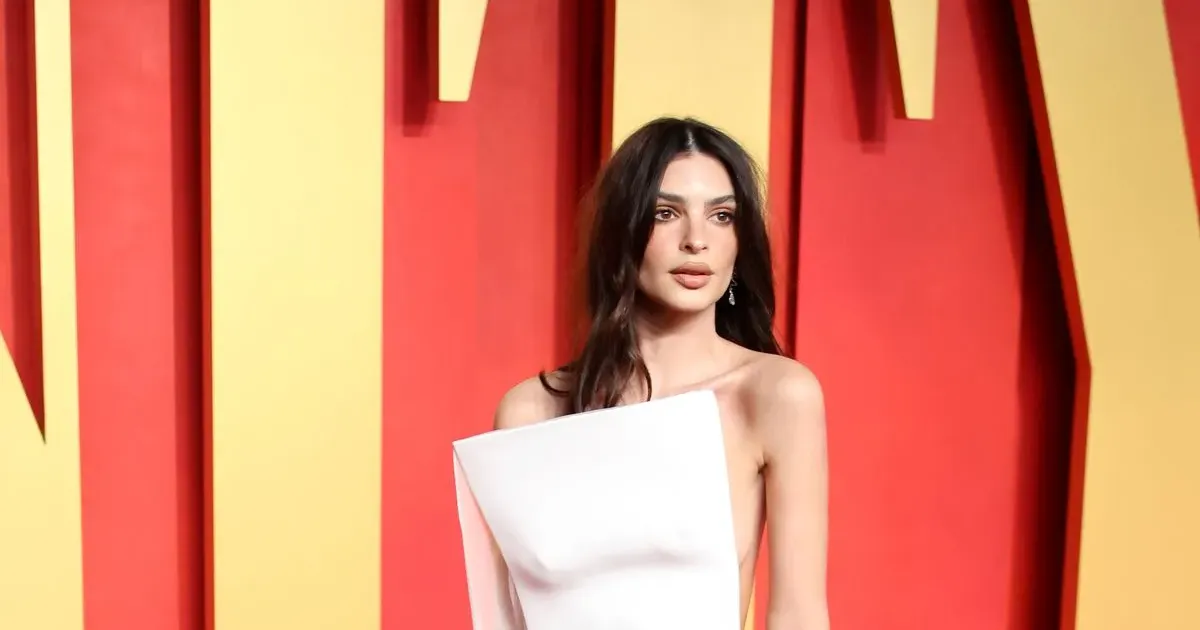
Emily Ratajkowski’s ascent to stardom began at 21, when she appeared topless in Robin Thicke’s 2013 music video for Blurred Lines, a cultural phenomenon that amassed over 768 million YouTube views. In her essay collection My Body, she reflects on the intoxicating allure of being “famously sexy,” a label that brought both validation and vulnerability. The spotlight thrust her into a world where beauty became both a currency and a cage, shaping her career and psyche in ways she’s still unraveling.
The Allure of Being Desired
The Highs of Validation
Ratajkowski describes the euphoria of being desired as a heady rush, a moment where external approval feels like a personal triumph. In her essay “K-Spa,” she recounts a fleeting interaction with a truck driver who flirted with her after a day at a women-only spa in LA’s Koreatown. Initially disheartened, she admits to a smirk, reaching for lipstick to reclaim that spark of validation—a small but telling act of navigating her identity in a world obsessed with her image.
The Psychological Cost
Yet, the thrill of being desired comes with a shadow. Ratajkowski’s essays reveal the warping psychological lows of constant objectification, where her worth often felt tied to her appearance. She writes of moments where the gaze of others—whether a photographer, a fan, or a stranger—reduced her to a product, leaving her grappling with shame and self-doubt. This duality of empowerment and exploitation forms the heart of her narrative, exposing the precarious tightrope of fame.
The Predatory Nature of the Fashion Industry
A Culture of Replaceability
The fashion world, as Ratajkowski describes, is a landscape where models are taught they’re replaceable. In My Body, she recounts being abandoned by agents in precarious situations and the pressure to conform to unattainable beauty standards—like dropping ten pounds after a bout of stomach flu, which suddenly boosted her bookings. This predatory environment thrives on insecurity, where being “agreeable” often means sacrificing personal boundaries.
Sexual Assault and Power Dynamics
Ratajkowski’s essays don’t shy away from darker truths. She details instances of sexual assault, carefully chosen to explore moments of unresolved shame rather than to catalog trauma. “I wanted to return to moments where I felt vulnerable,” she told CNN, emphasizing her intent to spark conversations about concealed power dynamics. These experiences, from being groped on the Blurred Lines set to assaults by photographers, highlight the industry’s systemic exploitation of young women.
The Life Cycle of a Muse
The Story of Audrey Munson
In her essay “Men Like You,” Ratajkowski draws a haunting parallel to Audrey Munson, dubbed “America’s first supermodel.” Munson posed for iconic sculptures, like Civic Fame atop New York’s Municipal Building, yet her story ended in tragedy—attempted suicide at 28 and decades in a psychiatric hospital. “Get discovered, be immortalized in art for which you’re never paid, and die in obscurity,” Ratajkowski writes, reflecting on the fleeting, often exploitative life of a muse.
Modern Parallels
Ratajkowski sees herself in Munson’s story, a cautionary tale of beauty’s transient power. Despite her fame, she’s acutely aware of the industry’s tendency to discard those who no longer fit its mold. Her decision to continue modeling, despite its flaws, has drawn criticism, but she argues it’s about carving out control where possible. “I’m not an unknown model anymore,” she says, highlighting how her status affords her leverage she lacked early on.
Navigating Complicity and Criticism
The Complexity of Complicity
Ratajkowski doesn’t shy away from her role in the system. “I am complicit,” she admits, acknowledging her participation in an industry that thrives on objectification. Yet, she pushes back against shaming women for leveraging their appearance. “Criticizing a young woman for wearing a tight dress to be noticed by someone powerful is an extension of the same misogyny I’ve seen,” she argues, advocating for understanding over judgment.
Defending the Choice to Stay
Her choice to remain in modeling has sparked debate, with some accusing her of dodging the issues she critiques. Ratajkowski counters that no woman should be faulted for operating within the world’s constraints. Her essays explore this tension—how to thrive in a flawed system while advocating for change. It’s a nuanced stance, reflecting her attempt to balance personal agency with systemic critique.
The Power of Storytelling
Making Big Concepts Relatable
Ratajkowski’s My Body uses personal anecdotes to ground abstract concepts like patriarchy and capitalism. “I wanted to explore how these things show up in everyday situations,” she explains. From a photographer selling her images without consent to being paid $25,000 to attend the 2014 Super Bowl with a controversial billionaire, her stories reveal the transactional nature of beauty and the hidden power dynamics at play.
A Call for Conversation
Her goal isn’t to offer solutions but to spark dialogue. By sharing moments of vulnerability—like breaking down after an unpleasant interaction with her husband’s representative—she invites readers to question the systems that shape these experiences. Her vulnerability, paired with sharp cultural critique, makes My Body a compelling call to examine the cost of desire in a world that often reduces women to their appearance.
Comparison: Emily Ratajkowski vs. Audrey Munson
| Aspect | Emily Ratajkowski | Audrey Munson |
|---|---|---|
| Era | 21st century, digital age | Early 20th century |
| Claim to Fame | Blurred Lines music video, modeling, social media influence | Posed for iconic sculptures (e.g., Civic Fame) |
| Exploitation | Groped on set, images sold without consent, pressure to conform to beauty standards | Unpaid for art, abandoned by industry, institutionalized |
| Outcome | Continues modeling, writes My Body to reclaim narrative | Attempted suicide, spent decades in psychiatric hospital |
| Legacy | Uses platform to critique industry, advocate for change | Largely forgotten, a cautionary tale of the muse’s fleeting power |
This table underscores the eerie parallels between Ratajkowski and Munson, despite their different eras. Both faced exploitation, but Ratajkowski’s ability to write and publish her story gives her a voice Munson never had.
Pros and Cons of Capitalizing on Beauty
Pros
- Financial Reward: Modeling can yield significant income, as seen in Ratajkowski’s $25,000 Super Bowl appearance.
- Visibility: Beauty opens doors to fame and influence, amplifying one’s platform.
- Empowerment: External validation can boost confidence, as Ratajkowski notes in moments of feeling “seen.”
- Agency: With fame, models like Ratajkowski can negotiate better terms and control.
Cons
- Objectification: Constant scrutiny reduces individuals to their appearance, fostering insecurity.
- Exploitation: The industry often exploits vulnerability, as seen in Ratajkowski’s assault experiences.
- Psychological Toll: The pressure to maintain beauty standards can lead to shame and self-doubt.
- Transience: The “muse” lifecycle is short, with replaceability a constant threat.
People Also Ask (PAA)
What is My Body by Emily Ratajkowski about?
My Body is a collection of 12 essays where Ratajkowski explores her complex relationship with her image, detailing the highs and lows of being desired. It delves into themes of objectification, power dynamics, and the fashion industry’s predatory nature, using personal anecdotes to make broader societal critiques accessible.
Why did Emily Ratajkowski write My Body?
She wrote My Body to process moments of shame and vulnerability, particularly around sexual assault and exploitation. Her goal was to spark conversations about hidden power dynamics in everyday life, using her experiences to humanize concepts like patriarchy and capitalism.
How did Blurred Lines impact Emily Ratajkowski’s career?
The Blurred Lines video catapulted Ratajkowski to global fame at 21, branding her as “famously sexy.” While it opened doors, it also exposed her to objectification and assault, shaping her career and fueling her reflections in My Body.
Where can I buy My Body by Emily Ratajkowski?
My Body is available at major retailers like Amazon, Barnes & Noble, and independent bookstores. It was published by Metropolitan Books on November 9, 2021, in hardcover, paperback, and e-book formats.
What are the dangers of being desired, according to Ratajkowski?
Ratajkowski highlights objectification, exploitation, and psychological tolls like shame and self-doubt. She describes how the fashion industry’s predatory nature and societal pressures amplify these dangers, often leaving women feeling like products rather than people.
FAQ Section
How does Emily Ratajkowski view the fashion industry?
Ratajkowski sees it as predatory and disorientating, teaching models they’re replaceable while exploiting their vulnerabilities. Despite this, she continues modeling, finding ways to assert control and using her platform to critique the system.
What inspired the title My Body?
The title reflects Ratajkowski’s preoccupation with how her body has shaped her identity, career, and psyche. It encapsulates her struggle to reclaim agency over her image in a world that often reduces her to it.
How does Ratajkowski address sexual assault in her book?
She carefully selects experiences to explore unresolved feelings of shame, not to list traumas. Her aim is to understand why these moments linger and to spark broader discussions about power dynamics.
Is My Body a memoir or an essay collection?
It’s an essay collection, blending personal anecdotes with cultural critique. Each essay focuses on specific experiences, like modeling or assault, to explore themes of desire and exploitation.
Where can I learn more about Emily Ratajkowski’s work?
Visit her official website or follow her on Instagram for updates on her modeling, acting, and writing. For deeper insights, read My Body or check interviews on platforms like CNN Style.
Reclaiming the Narrative
Ratajkowski’s My Body is more than a celebrity tell-all; it’s a raw, introspective look at the cost of being desired in a world that commodifies beauty. Her story resonates because it’s relatable—not just to models, but to anyone who’s felt the weight of external expectations. I remember a friend, a dancer, who once shared how she’d smile through inappropriate comments from choreographers, just to keep her spot. Like Ratajkowski, she navigated a system that demanded compliance while craving control. It’s a universal tension, and Ratajkowski’s vulnerability makes it impossible to look away.
Her essays don’t offer neat resolutions, and that’s the point. Life in the spotlight is messy, a mix of pride and pain, power and powerlessness. When she writes about applying lipstick after a stranger’s validation, it’s not vanity—it’s a human instinct to reclaim agency in a moment of vulnerability. It’s the same instinct that drove her to write My Body, to take the pen and tell her story before someone else could.
Transactional Beauty: A Case Study
In her essay “Transactions,” Ratajkowski recounts being paid $25,000 to attend the 2014 Super Bowl with Jho Low, a Malaysian billionaire later embroiled in the 1MDB scandal. The experience was a stark reminder of beauty’s transactional nature—her presence was a commodity, her value tied to her image. It’s a moment that mirrors countless others, where her appearance was leveraged for profit, often without her full consent or control.
This anecdote hits home because it’s not unique to Ratajkowski. I once knew a colleague who modeled part-time, invited to “exclusive” events where her role was to “look pretty” for high-profile guests. She described the unease of being a prop, yet the paycheck kept her going. Ratajkowski’s story elevates this experience, exposing how systemic these transactions are and how they erode personal agency.
The Broader Conversation
Ratajkowski’s work challenges us to rethink desire—not just as a personal experience, but as a cultural force shaped by patriarchy and capitalism. Her essays ask tough questions: Why do we value women’s bodies over their voices? Why is external validation so intoxicating, yet so fleeting? By sharing her story, she invites readers to reflect on their own experiences of being seen—or unseen—in a world that often prioritizes appearance over substance.
Her call for conversation isn’t just rhetoric. On platforms like X, fans and critics alike grapple with her message. One user noted, “She’s right about the cultural problem, but it’s messy because she’s still in the game”. Another praised her for exposing the industry’s commodification of identity. These reactions show her impact—sparking debate, even if it’s polarized.
Tools for Exploring My Body
For those inspired by Ratajkowski’s work, here are ways to engage:
- Read My Body: Available at Amazon or Barnes & Noble.
- Follow Her Journey: Check her Instagram or official website for updates.
- Join the Conversation: Share thoughts on X or book clubs to discuss power dynamics.
- Support Advocacy: Explore organizations like RAINN for resources on sexual assault awareness.
A Final Reflection
Emily Ratajkowski’s My Body is a mirror held up to a world obsessed with beauty, reflecting both its allure and its dangers. Her story isn’t just about fame—it’s about the human cost of being desired, the struggle to be seen as more than a body. As she walks the runway at Versace or pens her next essay, Ratajkowski continues to navigate this tension, proving that reclaiming one’s narrative is a radical act. Her voice, raw and unflinching, reminds us that beauty may open doors, but it’s the courage to speak that keeps them open.