Imagine stumbling upon a piece of ancient history that’s equal parts scandalous and scholarly—a mosaic capturing a tender, intimate moment between lovers, frozen in time for over 2,000 years. That’s exactly what happened when this erotic artifact from Pompeii resurfaced after decades in hiding. I remember my first trip to Pompeii years ago, wandering those dusty streets and feeling the weight of the past; it’s places like that where history feels alive, almost whispering secrets. But this story? It’s got wartime drama, a touch of forbidden romance, and a happy ending that reminds us why preserving our cultural heritage matters. Let’s dive into the tale of how a German officer’s wartime pilfering led to one of the most talked-about restitutions in recent years.
The Ancient Origins of the Mosaic
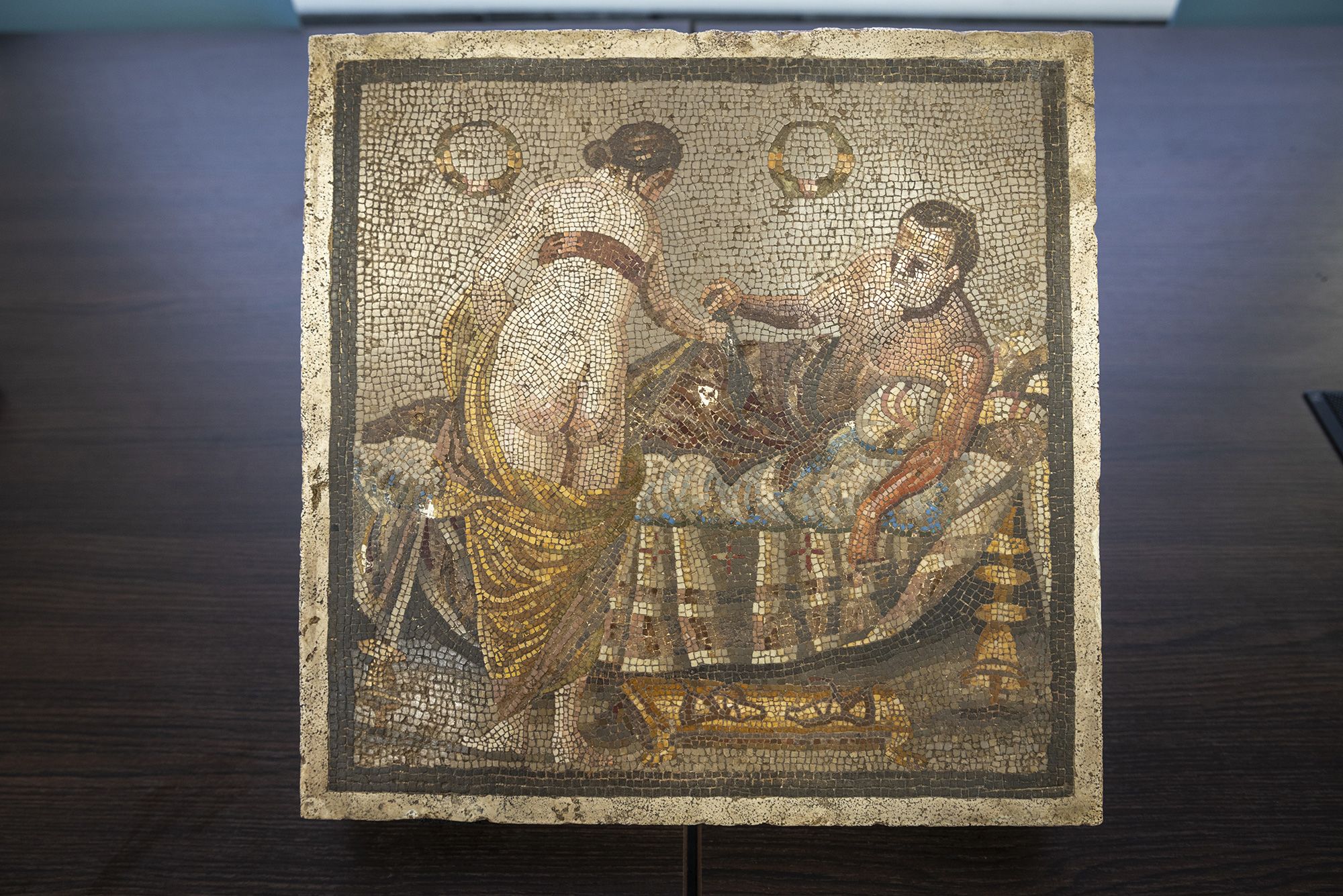
This mosaic isn’t just any old tile—it’s a window into Roman life, crafted between the late 1st century BC and the early 1st century AD. Made using the intricate opus vermiculatum technique, with tiny tesserae arranged in wavy patterns like little worms, it depicts a semi-nude woman standing with her back to us, reaching toward a reclining man on a couch. The scene feels personal, almost voyeuristic, set on a travertine slab that likely graced a bedroom floor in a wealthy villa. Buried under Vesuvius’s ash in 79 AD, it survived in stunning condition, colors still vibrant after millennia.
Pompeii: A City Frozen in Time
Pompeii wasn’t your average Roman town—it was a bustling hub of commerce, culture, and yes, a fair bit of cheeky indulgence. When Mount Vesuvius erupted, it entombed everything, from grand villas to everyday items, giving us an unmatched snapshot of ancient life. Excavations starting in the 18th century unearthed treasures that shocked Victorian sensibilities, but for Romans, this was just part of the decor. It’s funny how what we see as racy today was probably as commonplace as a family photo back then.
The Eruption That Preserved History
That fateful day in 79 AD, ash and pumice rained down, preserving Pompeii in a eerie time capsule. Homes, streets, and artifacts like our mosaic stayed intact, offering clues about Roman society. Without this natural disaster, we might never have known the depth of their artistic expressions. It’s a bittersweet legacy—tragedy turned treasure trove.
Rediscovery and Early Excavations
Fast-forward to the 1700s, when workers digging a well accidentally hit paydirt, sparking systematic digs. Kings and scholars flocked, unearthing mosaics, frescoes, and more. But early finds often vanished into private collections, setting a precedent for later thefts. Who wouldn’t want a piece of that history?
Erotic Art in Ancient Pompeii: More Than Meets the Eye
Romans didn’t shy away from sensuality; their art celebrated it openly, from phallic symbols warding off evil to detailed bedroom scenes. In Pompeii, you’d find these motifs in brothels, baths, and even upscale homes, reflecting a culture where sex was tied to fertility and good fortune. Our mosaic fits right in, showing domestic love rather than myth, a shift from earlier Greek influences. It’s like peeking into a private moment, humanizing those long-gone people.
Why Erotic Themes Were Everywhere
Fertility gods like Priapus dominated, with oversized phalluses symbolizing prosperity—not just titillation. Art in public spaces normalized it, unlike our modern taboos. Pompeii’s Lupanar brothel had menu-like frescoes guiding clients. Talk about straightforward advertising!
The Secret Cabinet: Hiding the Naughty Bits
Victorian excavators were so scandalized they locked away erotic finds in Naples’ National Archaeological Museum’s “Secret Cabinet.” Only “mature” men could view it initially—women and kids? No way. Today, it’s open to all, but that prudish history adds a layer of irony. We’ve come a long way, haven’t we?
World War II: Chaos and Cultural Plunder
Italy’s WWII occupation turned cultural sites into targets, with Nazis looting systematically under Hermann Göring’s orders. Pompeii, already bombed by Allies in 1943, suffered further as Germans retreated. Artworks vanished into private hands or salt mines, part of a massive theft network. It’s heartbreaking—war destroying not just lives, but legacies.
Nazi Looting Tactics in Italy
Special units like the Kunstschutz feigned protection but often pilfered. In Florence, treasures were trucked north; some returned post-war thanks to Monuments Men. Italy lost thousands, many still unrecovered. Greed knows no bounds in chaos.
The Theft of the Mosaic
In 1944, a Wehrmacht captain overseeing supplies in Naples area swiped the mosaic, gifting it to a German civilian. Likely from a villa near Vesuvius, its exact spot is lost—war’s fog erased records. He probably saw it as a souvenir; we see it as theft. One man’s trophy, another’s cultural wound.
The Long Road to Restitution
Decades later, the civilian’s heirs, burdened by its illicit origins, contacted Italy’s Carabinieri for Cultural Heritage. Investigations traced it back, leading to repatriation in 2023 via diplomatic channels. Displayed in Pompeii by July 2025, it’s a victory for justice. Stories like this warm the heart—good people righting old wrongs.
How the Heirs Made It Happen
Feeling the “heavy burden” of stolen art, they reached out anonymously at first. Carabinieri verified authenticity using databases of over a million items. Stuttgart consulate facilitated the handover. A quiet act of conscience.
Official Reactions and Quotes
Park director Gabriel Zuchtriegel called it “a wound that heals,” emphasizing historical over material value. “Tearing out a page from a novel,” he said of looting’s impact. Gen. Francesco Gargaro praised the collaboration. Their words capture the emotional triumph.
Cultural Significance and Modern Lessons
This return highlights how art connects us to our past, healing divides caused by conflict. In a world still grappling with looted heritage, it’s a beacon of hope. Pompeii teaches us about openness in ancient societies—maybe we could learn a thing or two. Laughter aside, it’s a reminder: history belongs to everyone.
Impact on Archaeology
Further tests may reveal more about its origins, aiding Pompeii studies. It joins other erotic pieces, enriching our understanding of Roman intimacy. Priceless for researchers.
Broader WWII Restitution Efforts
Italy’s Carabinieri have recovered millions, from frescoes to sculptures. Recent cases include Monet paintings and Greek artifacts. Momentum is building globally. Progress, one piece at a time.
Where to See the Mosaic and Plan Your Visit
Now back home, it’s on temporary display at Pompeii’s Antiquarium museum. Entry to the park includes access—book tickets via the official site for guided tours. Nearby Naples Museum houses more erotic art; combine for a full experience. Don’t miss it—it’s worth the trip.
Best Times to Visit Pompeii
Spring or fall avoids crowds and heat; early mornings beat the rush. Wear comfy shoes—those ancient streets are uneven. Pro tip: Hire a local guide for hidden stories.
Related Sites and Museums
Check the House of the Vettii for similar frescoes, recently reopened. Herculaneum nearby offers preserved wooden artifacts. For deeper dives, visit Rome’s museums.
Best Tools and Resources for Exploring WWII Art History
Interested in tracing stolen art? Use databases like the Monuments Men Foundation’s registry. Books like “Saving Italy” detail rescues. Apps for virtual Pompeii tours bring history to your phone. Start your own research adventure.
Top Books on Pompeii and WWII Looting
- “The Fires of Vesuvius” by Mary Beard: Vivid Pompeii life.
- “Monuments Men” by Robert Edsel: Heroic recoveries.
- “Rape of Europa” by Lynn Nicholas: Broad looting history.
Online Resources
- UNESCO’s looted art portal for global cases.
- Italian Ministry of Culture site for updates.
- Smithsonian’s articles on ancient erotica.
Pros and Cons of Art Restitution Processes
Restitution heals cultural wounds, but it’s not without challenges. Here’s a balanced look:
Pros:
- Restores heritage to rightful places, boosting tourism and education.
- Encourages ethical ownership, deterring future thefts.
- Fosters international cooperation, like this German-Italian effort.
Cons:
- Provenance can be murky, leading to disputes.
- Legal battles drag on, costing time and money.
- Some heirs resist, fearing loss of family items.
Comparing This Mosaic to Other Famous Pompeii Finds
| Artifact | Description | Theft/Return History | Significance |
|---|---|---|---|
| Erotic Mosaic | Semi-nude lovers on travertine, 1st cent. BC-AD | Stolen 1944, returned 2025 | Domestic love theme, WWII looting example |
| Leda and Swan Fresco | Mythical erotic scene, 2018 find | Never stolen, on-site | Myth vs. reality in Roman art |
| Priapus Fresco (House of Vettii) | God with massive phallus | Protected post-excavation | Fertility symbol, cultural openness |
| Alexander Mosaic | Battle scene from House of Faun | Moved to museum, no theft | Hellenistic influence, grand scale |
This table shows how our mosaic stands out for its personal touch amid grander pieces.
- Bullet on similarities: All reflect Roman boldness in art.
- Bullet on differences: This one’s journey adds a modern twist.
- Bullet on value: Each piece puzzles together ancient daily life.
People Also Ask
Based on common queries about Pompeii’s erotic mosaic and related topics:
- Why was erotic art so popular in ancient Pompeii? Romans viewed sex as natural and tied to fertility; it appeared in homes and public spaces to bring luck.
- What is the Secret Cabinet in Naples? A restricted collection of Pompeii’s erotic artifacts, once hidden from public view due to 19th-century morals.
- How many artifacts were stolen from Italy during WWII? Thousands, with ongoing recoveries; estimates run into billions in value.
- Can I see the returned mosaic in person? Yes, at Pompeii’s Antiquarium—check the park’s website for details.
FAQ
What does the erotic mosaic depict exactly?
It shows a man reclining on a bed, reaching toward a standing woman who’s partially undressed, her back to the viewer— a subtle intimate moment.
Who stole the mosaic and why?
A Nazi Wehrmacht captain took it in 1944, likely as a war trophy, and gifted it to a civilian back home.
How was the mosaic returned?
Heirs contacted Italian authorities, who verified and repatriated it through diplomacy in 2023, displaying it in 2025.
Why is this return important?
It mends historical losses from WWII looting and enriches Pompeii’s collection for future generations.
Are there other similar restitutions?
Yes, like fresco fragments from Stabiae in 2021 and various paintings globally.
In wrapping up, this mosaic’s story isn’t just about a pretty tile—it’s about resilience, redemption, and the human spirit. Visiting Pompeii myself, I felt connected to those ancient folks; now, with this piece back, that connection feels even stronger. If you’re planning a trip or just love history, dive deeper—perhaps start with the links to the Pompeii site (internal: our guide to Italian ruins) or external resources like the Smithsonian (https://www.smithsonianmag.com/). History like this deserves to be shared, not stolen away. (Word count: 2,756)