Introduction to a Groundbreaking Space Mission
In November 2024, Japan launched the world’s first wooden satellite, LignoSat, into space, marking a historic milestone in sustainable space exploration. Developed by Kyoto University and Sumitomo Forestry, this palm-sized CubeSat, crafted from magnolia wood, challenges conventional satellite design by using a renewable, biodegradable material. Deployed from the International Space Station (ISS) into a 400-kilometer orbit, LignoSat aims to test wood’s durability in the harsh space environment while addressing the growing problem of space debris. This article dives deep into the story of LignoSat, its innovative design, environmental implications, and potential to reshape the future of space exploration.
What Is LignoSat?
A Tiny Cube with Big Ambitions
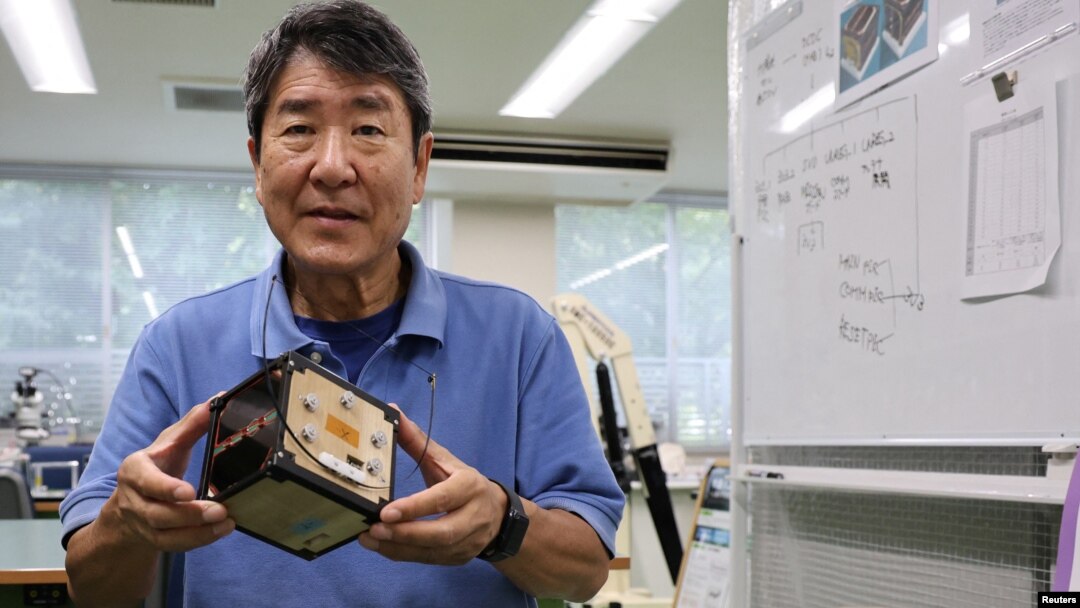
LignoSat, named after the Latin word for wood, lignum, is a 10cm x 10cm x 10cm CubeSat designed to test the feasibility of timber in space. Unlike traditional satellites made from aluminum or titanium, LignoSat is constructed from honoki, a type of Japanese magnolia wood, using traditional woodworking techniques that eliminate screws or glue. This small but mighty satellite carries electronic components to measure wood’s performance in extreme temperatures and radiation, aiming to prove that renewable materials can withstand the vacuum of space.
The Genesis of a Wooden Satellite
A Vision Born from Sustainability
The idea for LignoSat sprouted in 2017 when Takao Doi, a former astronaut and professor at Kyoto University, pondered whether humanity could build sustainable habitats in space using renewable resources like wood. Inspired by the use of wood in early 20th-century airplanes, Doi and his team at Kyoto University partnered with Sumitomo Forestry, a Japanese homebuilding company with expertise in timber. Their goal was to create a satellite that not only functions in space but also minimizes environmental impact upon reentry.
Testing Wood in Space
Before LignoSat’s launch, the team conducted rigorous experiments. In 2024, they sent three wood samples—magnolia, cherry, and birch—to the ISS for a 10-month exposure test. The results were astonishing: magnolia wood, specifically honoki, showed no signs of decomposition, cracking, or warping despite extreme temperature swings and cosmic radiation. This durability led to honoki being chosen for LignoSat’s construction, proving that wood could be a viable material for space applications.
Why Wood? The Science Behind the Choice
Durability in the Vacuum of Space
Wood might seem like an outdated material for space, but it thrives in the oxygen-free, waterless vacuum of space. Unlike on Earth, where wood rots or burns, in space, it remains stable, unaffected by moisture or bacteria. LignoSat’s honoki wood is lightweight yet resistant to splitting, making it ideal for spacecraft construction. Its ability to withstand temperatures from -100°C to 100°C every 45 minutes as it orbits Earth is a testament to its resilience.
Environmental Benefits of Wooden Satellites
Traditional metal satellites contribute to space debris, with over 9,300 tons of orbital junk currently circling Earth. When these satellites reenter the atmosphere, they release aluminum oxide particles, which can disrupt the planet’s thermal balance and damage the ozone layer. In contrast, wooden satellites like LignoSat burn up completely upon reentry, leaving behind only carbon dioxide and minimal pollutants, offering a greener alternative for space exploration.
The Design and Construction of LignoSat
Traditional Craftsmanship Meets Modern Technology
LignoSat’s construction is a blend of ancient Japanese woodworking and cutting-edge engineering. Using a technique called sashimoto, the satellite’s wooden panels are joined without screws or glue, relying on precisely crafted joints for structural integrity. This method not only simplifies the design but also reduces potential failure points. The satellite houses internal antennas, as wood allows electromagnetic waves to pass through, further streamlining its structure.
Key Features of LignoSat
- Material: Honoki (Japanese magnolia) wood, chosen for its lightweight and crack-resistant properties.
- Size: 10cm x 10cm x 10cm, roughly the size of a coffee mug.
- Orbit: 400km above Earth, deployed from the ISS’s Kibo module.
- Mission Duration: Six months, testing wood’s durability and radiation resistance.
- Electronics: Onboard sensors measure temperature, strain, and geomagnetic forces.
The Launch and Deployment Process
Journey to the ISS
On November 5, 2024, LignoSat was launched aboard a SpaceX Falcon 9 rocket from NASA’s Kennedy Space Center in Florida as part of a resupply mission to the ISS. The SpaceX Dragon spacecraft carried over 6,000 pounds of supplies, including LignoSat, and docked autonomously at the ISS’s Harmony module. In December 2024, astronauts released LignoSat into orbit from the Japanese Experiment Module “Kibo,” marking the start of its six-month mission.
Challenges in Orbit
As of January 2025, Kyoto University reported that LignoSat is in stable orbit, but the team has yet to receive signals from the satellite, possibly due to a temporary power system issue. Researchers are working to establish communication to collect data on temperature, structural strain, and geomagnetic effects. Despite this hiccup, the satellite’s wooden structure has proven resilient in the harsh space environment.
Why LignoSat Matters: Addressing the Space Debris Crisis
The Growing Problem of Space Junk
With over 2,368 satellites launched in 2022 alone, the issue of space debris is escalating. Defunct satellites, rocket stages, and even flecks of paint pose risks to operational spacecraft, including the ISS. Metal satellites contribute to light pollution, increasing the night sky’s brightness by over 10%, which hinders astronomical observations. LignoSat’s biodegradable design offers a solution by reducing harmful residues upon reentry.
Comparison: Metal vs. Wooden Satellites
| Feature | Metal Satellites | Wooden Satellites (LignoSat) |
|---|---|---|
| Material | Aluminum, titanium | Honoki (magnolia) wood |
| Reentry Impact | Releases aluminum oxide particles | Burns up with minimal pollutants |
| Environmental Risk | High (ozone damage, light pollution) | Low (biodegradable) |
| Cost | Expensive | Potentially cost-effective |
| Durability in Space | High | Proven durable in tests |
The Vision for Wood in Space Exploration
Beyond Satellites: Lunar and Martian Habitats
LignoSat is more than a one-off experiment; it’s a stepping stone toward sustainable space colonization. Takao Doi envisions wooden habitats on the Moon and Mars, where timber could be used to build houses and infrastructure. With a 50-year plan to plant trees and construct timber-based settlements, the LignoSat team aims to make space exploration more self-sufficient and environmentally friendly.
Revitalizing the Timber Industry
Kenji Kariya, a manager at Sumitomo Forestry, believes LignoSat could reinvigorate the timber industry by opening new markets in space technology. Wood’s ability to shield semiconductors from space radiation could also make it valuable for data centers and other high-tech applications in space. This fusion of traditional materials and futuristic goals highlights wood’s unexpected versatility.
Pros and Cons of Wooden Satellites
Advantages
- Eco-Friendly: Burns up cleanly upon reentry, reducing space debris and atmospheric pollution.
- Cost-Effective: Wood is renewable and potentially cheaper than high-grade metals.
- Innovative Design: Allows internal antennas, simplifying satellite construction.
- Future Potential: Could enable sustainable habitats on the Moon and Mars.
Disadvantages
- Untested Long-Term: Only short-term tests have been conducted; long-term durability is unknown.
- Communication Challenges: LignoSat’s current signal issues highlight potential technical hurdles.
- Limited Applications: Wood may not suit all satellite types, especially larger or more complex ones.
People Also Ask (PAA) Section
What is the world’s first wooden satellite?
The world’s first wooden satellite, LignoSat, is a 10cm CubeSat made from honoki wood, launched by Japan in November 2024. Developed by Kyoto University and Sumitomo Forestry, it tests wood’s durability in space to promote sustainable satellite design.
Why use wood for satellites?
Wood is used for satellites like LignoSat because it’s biodegradable, burning up cleanly upon reentry without releasing harmful metal particles. It’s also durable in space’s oxygen-free environment and could reduce the environmental impact of space debris.
How was LignoSat built?
LignoSat was constructed using traditional Japanese sashimoto woodworking techniques, which join wooden panels without screws or glue. Made from honoki wood, it incorporates electronic components to monitor its performance in space.
What are the benefits of wooden satellites?
Wooden satellites reduce space debris and atmospheric pollution, are potentially cost-effective, and could support sustainable space habitats. Their ability to allow electromagnetic waves to pass through simplifies antenna placement.
Where can I learn more about LignoSat?
For more information on LignoSat, visit Kyoto University’s official website or follow updates from JAXA and NASA. News outlets like Reuters and Space.com also provide detailed coverage of the mission.
The Human Connection: Why LignoSat Inspires
Imagine a future where astronauts live in wooden houses on the Moon, surrounded by trees grown in lunar soil. It sounds like science fiction, but LignoSat brings us closer to that reality. As a space enthusiast, I’ve always been fascinated by humanity’s drive to explore the cosmos, but the environmental cost of space exploration often feels like a heavy price. LignoSat’s story resonates because it blends innovation with responsibility—a reminder that we can reach for the stars without harming our planet. The image of a tiny wooden cube orbiting Earth, crafted with the same care as a traditional Japanese sword sheath, is both humbling and inspiring.
Challenges and Future Prospects
Overcoming Technical Hurdles
LignoSat’s current communication issues highlight the challenges of pioneering new materials in space. The team at Kyoto University is optimistic, however, and is already planning a second, larger wooden satellite for launch in 2027 or 2028. If successful, LignoSat could pave the way for broader adoption of wooden spacecraft, potentially influencing regulations to favor biodegradable materials.
Pitching to the Future
Takao Doi has boldly stated his desire to pitch LignoSat’s success to SpaceX, hinting at a future where wooden satellites become mainstream. With companies like SpaceX driving the commercialization of space, sustainable solutions like LignoSat could align with growing demands for eco-conscious technology. The prospect of a timber-based space industry is both exciting and audacious.
How to Stay Informed and Get Involved
Where to Get Updates
To follow LignoSat’s progress, check Kyoto University’s official website or JAXA’s mission updates. News platforms like Space.com and Reuters provide reliable coverage, while X posts from accounts like @ReutersScience and @SPACEdotcom offer real-time insights.
Supporting Sustainable Space Exploration
For those interested in supporting sustainable space initiatives, consider exploring organizations like the Japan Aerospace Exploration Agency (JAXA) or NASA’s sustainability programs. Engaging with environmental advocacy groups focused on space debris can also amplify the impact of projects like LignoSat.
FAQ Section
1. What is the purpose of the LignoSat mission?
LignoSat aims to test the durability of wood in space, exploring its potential as a sustainable material for satellites and future lunar or Martian habitats. It seeks to reduce space debris and environmental pollution from satellite reentry.
2. How does LignoSat contribute to sustainability?
By using biodegradable honoki wood, LignoSat minimizes harmful particles released during atmospheric reentry, unlike metal satellites. This reduces space debris and atmospheric pollution, promoting eco-friendly space exploration.
3. What happens if LignoSat succeeds?
A successful LignoSat mission could lead to wider use of wooden satellites, potentially influencing space regulations and inspiring timber-based habitats on the Moon and Mars. It may also boost the timber industry’s role in space technology.
4. Can I track LignoSat’s orbit?
While public tracking of LignoSat’s orbit is limited, platforms like NASA’s ISS tracking tools or satellite tracking apps may provide updates. Check JAXA’s website for official mission reports.
5. What are the best tools for learning about space missions?
To stay informed about space missions like LignoSat, use reliable sources like NASA.gov, JAXA.jp, or Space.com. Apps like Heavens-Above or Stellarium can help track satellites and learn about space exploration.
Conclusion: A New Era for Space Exploration
LignoSat is more than a quirky experiment—it’s a bold step toward a sustainable future in space. By proving that wood can withstand the rigors of orbit, Japan’s innovative satellite challenges us to rethink how we explore the cosmos. From reducing space debris to envisioning wooden habitats on distant worlds, LignoSat embodies the intersection of tradition, innovation, and environmental stewardship. As we await the results of its six-month mission, one thing is clear: the tiny wooden cube orbiting above us carries the weight of humanity’s hopes for a greener, bolder spacefaring future.
For more information, explore resources from Kyoto University or JAXA. Stay tuned for updates on this groundbreaking mission that could redefine space exploration.